

Surviving a System Not Built for You Looks a Lot Like Resistance
IWD is over for another year. Now comes the hard part.

Last week, one of my nieces interviewed me for an assignment she is working on. It was humbling to be asked, and her questions left me reflecting. It turns out she wanted to know why I’d built my career the way I had, with multiple income streams, a coaching practice, speaking, facilitation, and creative work, all running alongside each other.
I gave her the answer I’d been preparing for this year’s IWD panels and interviews: I wanted to make space for the people who deserved the best of me. I wanted to do work that aligned – not just with my skills and my interests – but with the type of decisions and lifestyle I could be proud of. I wanted my time and energy to go to the things I actually valued, not just the things that would look good on a balance sheet.
What I also wanted to say was that while all of that might sound well and good now (years later with the advantage of retrospect), each time I made a conscious decision to decrease my work hours, turn down a job offer, or resign from a familiar and stable position, I was terrified. Each time I’ve decided to go against the grain and build a multi-passionate, multi-disciplined, portfolio career (long before I knew terms like “multi–passionate” or “multi-disciplined” or “portfolio career”), it felt like I was risking not just my salary, but my security, social capital, and sanity too.
So why did I do it? Because what felt riskier to me was the alternative: pouring the best of myself into a system that was never going to count most of what I cared about. That felt like the greater loss.
What I didn’t say to my niece in our interview, but what I’ve been thinking about ever since, is this: the reason it felt risky at all is because we live inside a system that has decided, very deliberately, what counts as valuable work and what doesn’t. And almost everything that makes life actually worth living sits in the column that doesn’t count.
The number that should stop us in our tracks
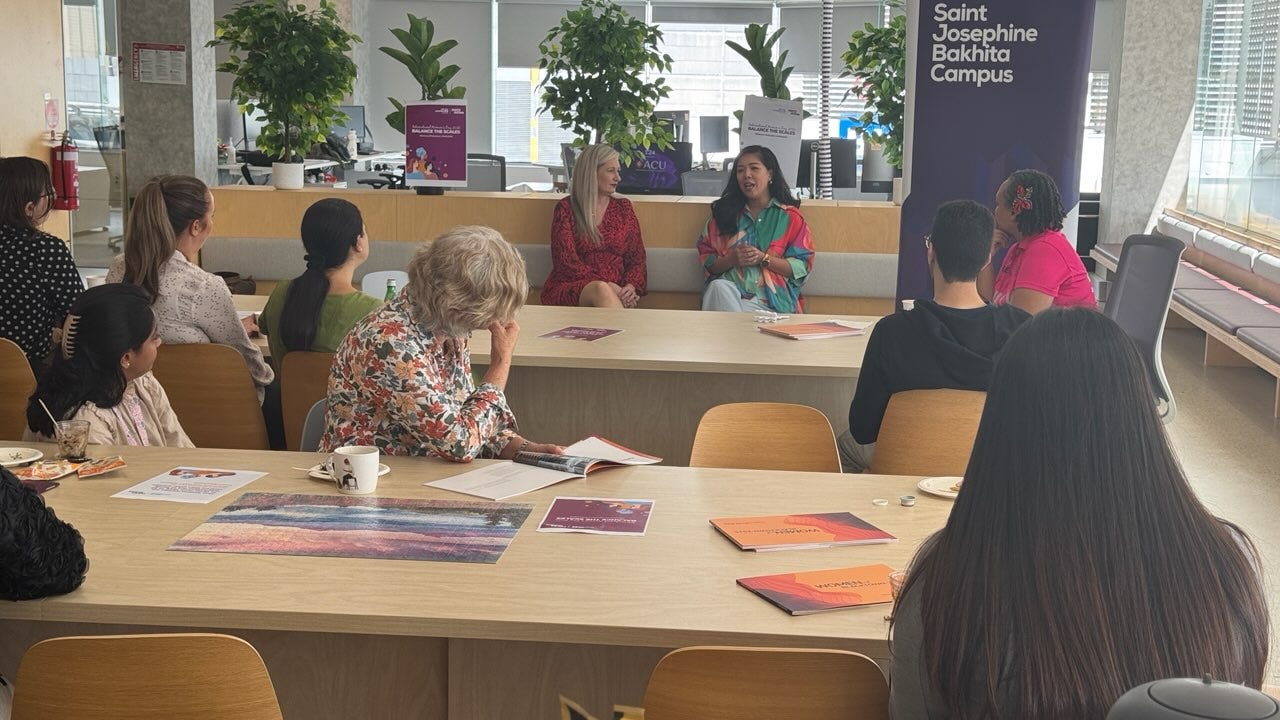
In late 2025, economist Leonora Risse published research that put an Australian dollar figure on women’s unpaid labour. The number was $427.3 billion per year.
Let that sit for a moment.
That’s not a global figure – that’s Australia alone. That’s the cooking, the cleaning, the school pickups, the sick days taken to care for children, fixing the internet or printer connection for elderly parents or driving them to appointments, the mental load of remembering everything everyone needs, every single day.
None of it is counted in our national accounts. Not a single dollar of it registers in the GDP figures that governments use to measure economic health, allocate resources, and decide what a productive contribution to society looks like.
When you add men’s unpaid labour to the picture, the total rises to $688 billion, equivalent to roughly one third of Australia’s entire GDP. And yet the men I speak with regularly tell me something that rarely makes it into the public conversation about gender equity: many of them want to contribute more at home. They want to be present for school drop-offs, sick days and sports carnivals, and contribute more to the important (but unglamorous!) work of keeping a household running. But the system makes it extraordinarily difficult to consider this as a valid option, let alone act on that desire. When one partner earns significantly more, and that partner is disproportionately likely to be the man, stepping back from paid work to share the unpaid load more equally comes at a real financial cost that many families simply cannot absorb.
The system doesn't just undervalue care work. It actively penalises the people who choose to do it. And until we change what we count, and what we reward, we will keep asking individuals to solve a structural problem on their own.
This isn’t a new problem, by the way. New Zealand economist Marilyn Waring was making this argument in the 1980s, documenting how the System of National Accounts, the framework that guides how countries define and measure economic production, was built to exclude any activity without a market price or paid wage. Care work. Community building. Raising children. Nursing the sick. Keeping households running. All of it invisible. All of it, by design, uncounted.
Waring called it what it was: a political choice masquerading as a neutral measurement tool.
Decades later, we are still living inside that choice.
It started as survival. Then it became something else…
I grew up in Western Sydney as the daughter of migrant parents, surrounded by women who worked harder than anyone I have ever met. My mum. My aunties. The women in my school community and at church. My sisters. Women who held everything together, who carried the invisible weight of households and families and communities, who made space for everyone else’s flourishing, often at the expense of their own.
I watched those women be underestimated, underpaid, and underrecognised. Not because they lacked capability, but because the systems they were working within had never been designed to see their full contribution.
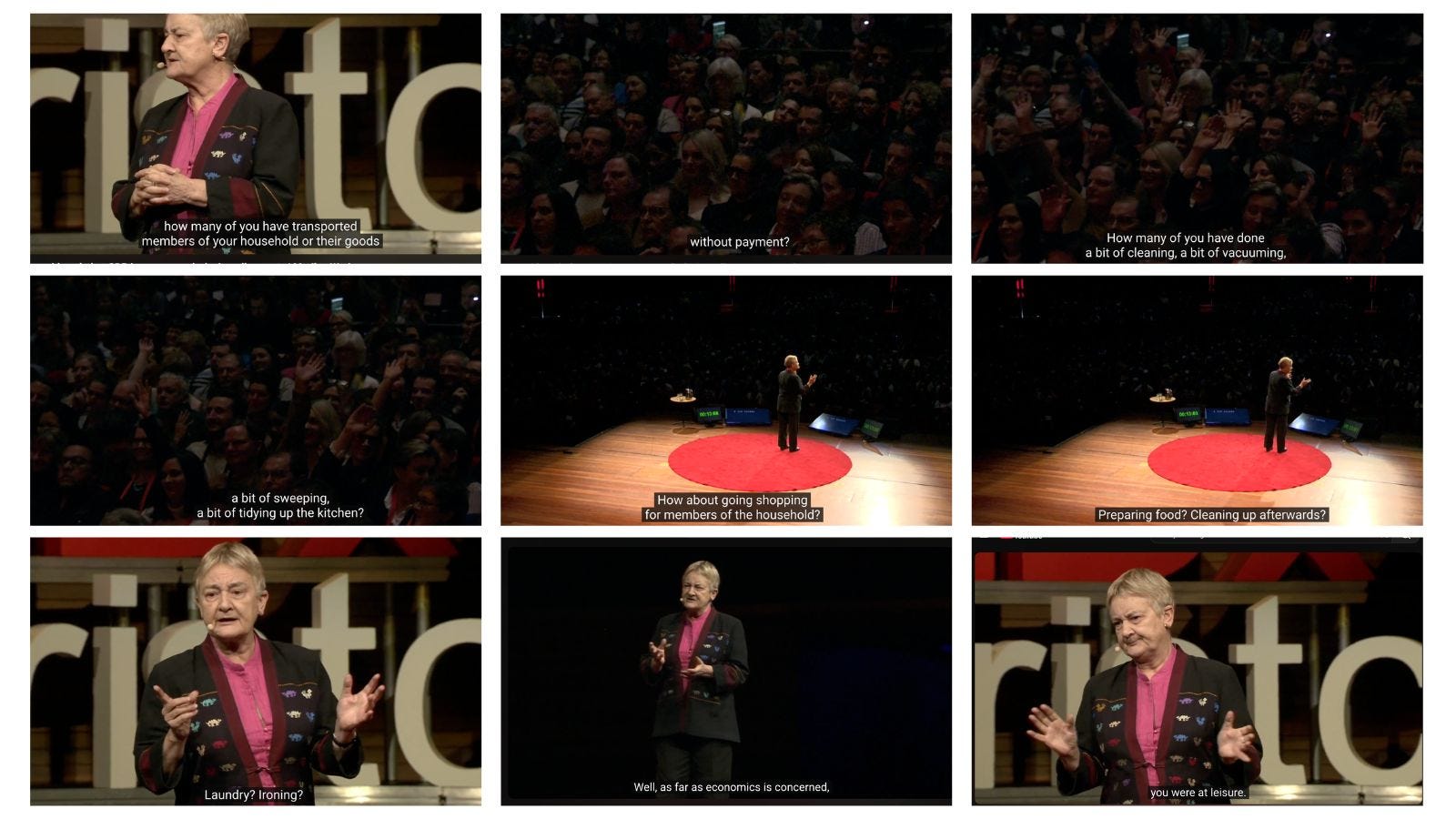
So, last week, when I walked onto the Blacktown campus of Australian Catholic University, last week to speak at an IWD panel, I was struck by the full-circle weight of it. This ACU campus didn’t exist on that strip of road when I was growing up there - but I did travel to the Strathfield Campus in my senior years of high school. It was there I learnt about Howard Gardner’s theory of multiple intelligences and realised there were many, different ways to be smart, and most didn’t show up on a test score. And 15-year-old me, walking between Blacktown Station and Westpoint, humming “Try Again” by Aaliyah to myself, lost in my big, uncertain daydreams, would not have predicted that she’d one day go back to that university as a speaker on a panel, and to be asked for advice about forging a path that looked nothing like the paths of the women who’d come before me.
But I want to be honest about something: the path that led me here wasn’t a tidy story of ambition and self-belief. It was, for a long time, an act of survival.

After I became a mother, I found myself sitting with a recognition I couldn’t ignore: I was pouring the best of my time, my energy, and my creativity into work that didn’t matter all that much to me, while the things that mattered most were getting what was left over. My family. My faith. My creative practice. The work that actually lit me up.
So I started to redesign. I sat down with my husband and had many raw and uncomfortable conversations about what we actually needed or wanted to change if I wanted to drop to a part-time salary. Then I dropped down to part-time work. Then, I started testing what other ways of working allowed me to spend the best of my time and energy with the people I loved most: freelance work, side hustles, a creative business… and the whole time I got a lot of questions from other people who didn’t quite understand why I wasn’t simply climbing the ladder I was clearly capable of climbing.
What I didn’t fully understand at the time, but understand now, is that I wasn’t just trying to survive. I was – quietly – refusing to let a broken system decide what my contribution was worth.
Choosing to value your time differently to the way the economy values it is not a lifestyle choice. It is a structural critique, lived out in the everyday.
And it is something more women, and more men, are doing. Not always by choice, and not always easily. But increasingly, people are asking the question I have asked myself over and over for years: what does it actually cost me to keep living inside a system that doesn’t count the things I care about?
Time poverty is real, and it is gendered
The research from UN Women puts it plainly: globally, women do more than half the world’s work, and nearly half of that work goes unpaid. Women and girls do 16 billion hours of unpaid care work every single day. And the consequence of that isn’t just financial invisibility. It is time poverty.
Time poverty is what happens when the hours required to keep life running leave you with no margin. No time to rest. No time to pursue the work that energises you. No time to participate in the civic and community life that builds connection and belonging. No time to simply be.
This is not an individual failing. It is a structural condition, and it lands disproportionately on women, and most heavily on women who are also navigating the compounding weight of cultural expectations, economic precarity, or caring for multiple generations simultaneously.
I have felt this weight. Most women I know have felt it. And yet we have been taught to experience it as a personal problem to manage, rather than a systemic problem to name.
So I’m writing about it… and I’m naming it.
If this is landing for you and you’re ready to think about what it looks like to lead, work, and live in a way that actually reflects your values, I’d love to connect.
Visit joyadan.com/contact to explore coaching or speaking enquiries.
What we’re really talking about when we talk about balancing the scales
The theme of this year’s IWD was “Balance the Scales.” It is a worthy aspiration. But I want to sit with what it actually asks of us.
Because if the scales we are trying to balance were built to make most of women’s contributions invisible, then adding more women to the existing structure is not enough. Helping women climb higher in systems that were never designed for them is not enough. Celebrating one day a year is definitely not enough.
What’s needed is something harder and more fundamental: a willingness to ask what we’re actually measuring, and whether what we measure reflects what we actually value.
Do we value care? Do we value community? Do we value the invisible, unpaid, unglamorous work that keeps families alive and societies functioning? Do we value the time and energy of the women who have been doing that work for generations without recognition or reward?
If the answer is yes, then the scales don’t need balancing: they need redesigning.

A few questions to sit with
This is Part 1 of a four-part series, and I want each post to leave you with something practical to hold – not just an argument to simmer over.
So here are a few honest questions worth sitting with this week:
What unpaid work are you doing right now that nobody is counting, including you? What would it mean to name its value out loud?
Where are you experiencing time poverty? And is it something you’ve been treating as a personal problem to manage rather than a structural reality to name?
If the system you’re currently working within was redesigned to count everything you contribute, not just the paid hours, what would your contribution actually be worth?
And finally: is the life you’re building one that reflects what you actually value? Or one that reflects what the system has decided is worth valuing?
Those questions don’t have easy answers. But I’ve found that they are the right ones to keep asking.
Next in this series, I plan to dive deeper into the narratives that shape what women believe is possible for them, and the cultural and generational messages that narrow the picture long before a system ever gets a chance to.
Want someone to walk alongside you as you work through what a redesigned life could look like? I’d love to connect. Book a discovery session at joyadan.com/contact.